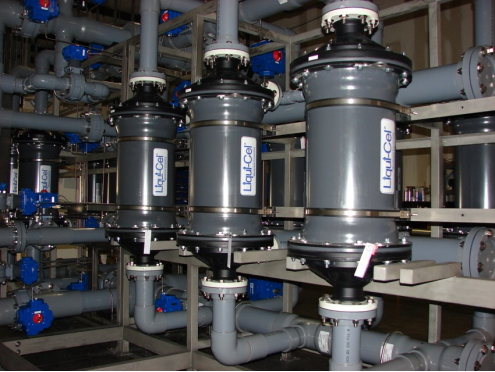
In numerous industrial fields, the preparation of ultrapure water is a crucial link, especially in industries such as electronics, pharmaceuticals, food and beverage. However, the carbon dioxide dissolved in ultrapure water not only affects the conductivity and desalination rate of ultrapure water, leading to equipment corrosion, but also may cause scaling problems of carbonates, which have serious consequences such as affecting the quality of effluent water or product yield. Therefore, how to efficiently and economically remove carbon dioxide from ultrapure water has become the focus of attention of many enterprises and scientific research institutions.
At present, traditional technologies usually adopt heating method, aeration method and chemical method. Although they have been widely used, with the advancement of science and technology and the improvement of production requirements, their shortcomings have become increasingly prominent. The heating method consumes a huge amount of energy, which not only increases production costs, but also may interfere with other components in the water; the aeration method is simple to operate, but has low efficiency and is difficult to meet the urgent needs of large-scale production; although the chemical method can effectively remove carbon dioxide, the introduction of chemical reagents brings additional troubles to subsequent water treatment and faces many challenges in terms of environmental protection.
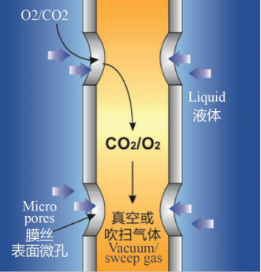
The new technology for carbon dioxide (CO₂) removal from ultrapure water is a membrane separation product that removes gases such as carbon dioxide and oxygen from water based on the principle of diffusion. Its working principle is based on water flowing on one side of the hollow fiber membrane filaments, while vacuum is applied, gas purging is performed, or a combination of both is adopted on the other side of the hollow fiber membrane filaments. The surface of the hollow fiber membrane filaments treated with hydrophobicization has many micropores, which allow gas molecules to pass through but can block the penetration of water molecules. Under the negative pressure of vacuum or gas purging, the dissolved gases in the water on one side of the hollow fiber membrane filaments continuously move to the other side through the micropores and are taken away by the vacuum or purge gas, thereby achieving the purpose of removing dissolved gases from the water. The degassing membrane is equipped with a large number of hollow fibers, which can expand the area of the gas-liquid interface, thereby increasing the gas removal rate. The degassing membrane can reduce the dissolved oxygen concentration to below 1ppb and the dissolved carbon dioxide concentration to below 1ppm.
Advantages of using degassing membrane technology for carbon dioxide (CO₂) removal:
Efficient CO₂ removal: Through membrane surface micropores for gas separation, the degassing membrane technology can efficiently remove carbon dioxide with a degassing efficiency of up to 99.99%. The oxygen concentration in the effluent water is less than 1ppb, and the carbon dioxide (CO₂) concentration is less than 1ppm.
Compact equipment, space-saving: The degassing membrane equipment has a compact structure and a small floor area, which is suitable for new projects and the transformation of existing equipment, and is easy to install and maintain.
Low energy consumption, energy-saving and environmental protection: Compared with traditional decarbonization towers, the degassing membrane technology has low energy consumption and low operating costs, which meets the requirements of green production.
Simple operation and high degree of automation: The membrane gas membrane equipment is simple to operate, has a high degree of automation, fast start-up speed and low maintenance cost.
Reduction of secondary pollution: The gas blowing side is not in direct contact with ultrapure water, avoiding the risk of secondary pollution.
Improvement of process efficiency: Removing carbon dioxide can reduce the corrosion of ion exchange resins, extend their regeneration cycle, and improve the effluent quality of EDI or CDI systems.
Flexibility and scalability: The modular design supports flexible expansion, and the equipment scale can be adjusted according to needs.
Protection of product quality: In the semiconductor and flat panel display industries, removing carbon dioxide can protect the product quality of chips or display panels.
Long service life: The degassing membrane has stable performance and a long service life, which reduces equipment failures and downtime and lowers maintenance costs.
Since its establishment, Guochu Technology (Xiamen) Co., Ltd. has taken membrane separation technology as the core, committed to the promotion of new separation technologies, and continuously explored new applications of new membrane separation technologies in fields such as biopharmaceuticals, microelectronics, metallurgy, chemical industry, machinery, food, dairy products, beverages, and the environment. According to the highly differentiated needs of different customers, it provides targeted comprehensive filtration and purification solutions to improve product quality and meet customer needs.